A lot of families first ask what is community nursing when a loved one comes home from hospital with a dressing that needs changing, new medications to manage, or health needs that suddenly feel harder to handle alone. It is usually not a question asked out of curiosity. It comes up when daily life has changed, and safe support at home starts to matter.
Community nursing is professional nursing care provided outside the hospital, usually in a person’s home or in a community setting. The goal is to help people manage health conditions safely, recover well, and stay as independent as possible in familiar surroundings. Depending on the person, that care might be short term after surgery, ongoing support for a chronic condition, or more complex nursing for issues such as wound care, continence care, insulin management, stoma care, dementia support or palliative care.
For many older Australians, people living with disability, and adults recovering from illness or injury, community nursing can make home a realistic and safer place to receive care.
What is community nursing and who is it for?
At its core, community nursing brings clinical care to the person rather than expecting the person to keep travelling to care. That matters when mobility is limited, energy is low, or a condition needs regular monitoring in the home environment.
Community nursing can support older people who want to remain at home, people with disability who need health-related assistance, and those recovering after a hospital stay. It can also help people living with long-term conditions such as diabetes, reduced mobility, continence concerns, or memory changes that affect day-to-day safety.
The exact service depends on the person’s needs. Some people need only a few visits to get through a recovery period. Others benefit from regular nursing as part of a broader care plan that may also include personal care, domestic support, transport assistance or respite for family carers.
This is one reason community nursing is often misunderstood. It is not only for people with very high care needs, and it is not only for end-of-life care. It covers a wide range of clinical support that helps people stay well, avoid unnecessary hospital visits, and continue living with dignity at home.
What community nurses actually do
A registered nurse in the community does far more than complete a single task and leave. Good nursing care involves assessment, clinical judgement, education, monitoring, and clear communication with the person and, where appropriate, their family or other health professionals.
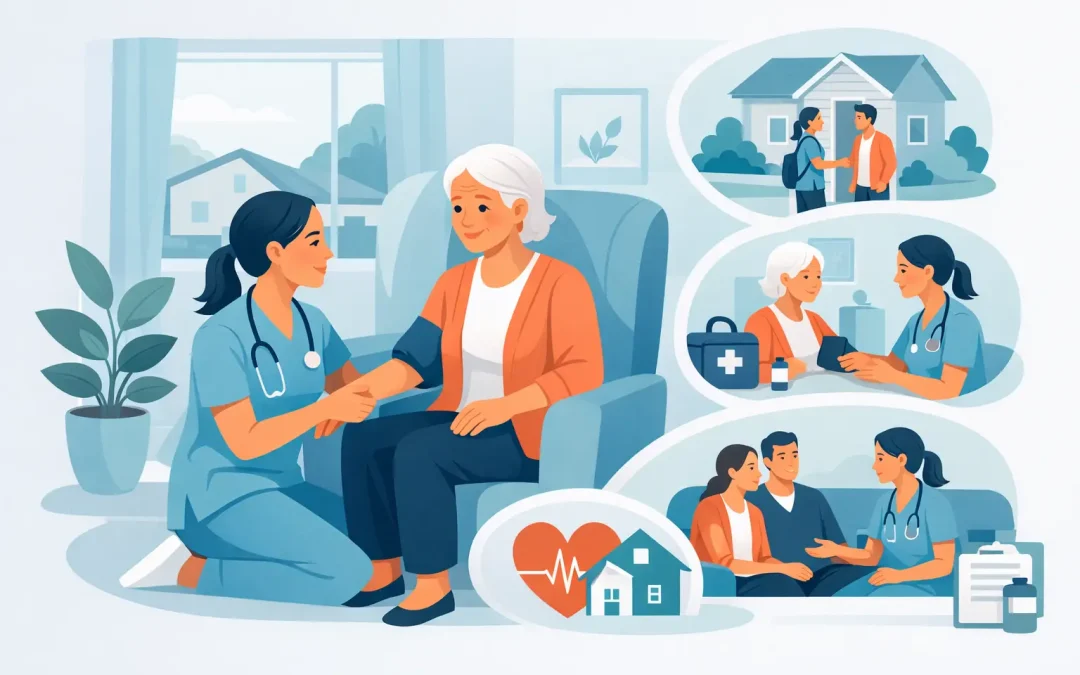
In practical terms, community nurses may provide wound care, pressure area care, medication support, diabetes care including insulin administration, catheter care, stoma care, continence assessments, post-operative monitoring, pain management support, and palliative nursing care. They may also observe changes in a person’s condition and act early if something does not look right.
That early recognition is one of the real strengths of community nursing. A nurse visiting the home can often spot subtle changes that might be missed otherwise, such as swelling, skin breakdown, confusion, reduced appetite, increasing weakness, or signs that medications are not being managed safely.
There is also an important education role. Nurses help people understand their condition, know what to watch for, and feel more confident managing care between visits. Families often value this just as much as the hands-on clinical support because it makes the whole situation feel more manageable.
Why home-based nursing care matters
There is a practical reason people prefer care at home – it is easier, more comfortable and often less disruptive. But there is also a deeper reason. Home is where routines, preferences and independence are easier to protect.
A person may eat better at home, sleep more comfortably, and feel less anxious in familiar surroundings. For someone living with dementia, a known environment can reduce confusion. For a person recovering after surgery, avoiding extra travel can save energy for healing. For families, regular visits from a qualified nurse can bring reassurance and reduce the pressure of trying to manage complex care alone.
That said, home-based nursing is not always the right fit for every situation. Some medical needs still require hospital treatment or intensive monitoring. Community nursing works best when there is a clear care plan, the right level of clinical oversight, and services matched to what the person actually needs rather than what sounds convenient.
How community nursing differs from home care
Families often use the terms interchangeably, but home care and community nursing are not exactly the same.
Home care usually refers to assistance with everyday living. That can include help with showering and dressing, meal preparation, cleaning, transport, shopping and social support. These services are vital for independence, but they are not clinical nursing services.
Community nursing involves care delivered by a qualified nurse, often a registered nurse, where clinical assessment and health management are required. If someone needs a wound assessed, insulin managed, a catheter changed, symptoms monitored, or palliative care delivered with clinical oversight, that sits within community nursing.
In many cases, people need both. A person coming home after a fall, for example, may need nursing visits for wound care and medication review, while also needing help with meals, mobility around the house and transport to appointments. When these supports work together, the result is usually safer and more consistent.
What to expect from a good community nursing service
Not all support feels the same, even when the service list looks similar on paper. The quality of community nursing often comes down to whether the care is tailored, coordinated and respectful.
A good service should begin with a proper assessment, not assumptions. The nurse needs to understand the person’s health needs, daily routine, risks at home, existing supports, and personal preferences. Some people want family heavily involved in care decisions. Others prefer more privacy and independence. Both are valid, and both should be respected.
Care should also be reviewed regularly. Needs change. A wound may improve, mobility may decline, medications may be updated, or confidence may return after recovery. Community nursing works best when the plan changes with the person.
Communication matters too. Families often feel overwhelmed when care starts suddenly after a hospital discharge or health event. Clear explanations, reliable scheduling and follow-up can make a significant difference. Clinically sound care is essential, but so is being treated with warmth, dignity and patience.
When families usually start looking into community nursing
Most people do not start by searching service categories. They start with a problem that needs solving.
It may be that Mum is coming home after a hospital stay and cannot manage dressings on her own. A partner may be trying to help with medications but is worried about making a mistake. A person living with disability may need regular clinical support alongside daily assistance. Someone with a progressive illness may need comfort-focused care at home, with nursing that supports both symptom management and the family around them.
There are also less urgent situations where community nursing is still valuable. A recurring wound, unstable blood sugar levels, continence issues, or increasing frailty can all become easier to manage with regular nursing oversight before they turn into larger problems.
If things feel like they are getting harder rather than easier, it is often the right time to ask what support could help.
Is community nursing only for older people?
No. Older people are a major group using community nursing, but they are not the only group.
Adults recovering from surgery, illness, workplace injuries or motor vehicle accidents may need short-term nursing at home. People living with disability may need ongoing clinical support as part of independent living. Some clients need help for a defined recovery period, while others need a longer-term arrangement because their condition is ongoing.
This is why a flexible, person-centred approach matters. Two people can both receive community nursing and have entirely different care plans. One may need several weeks of post-hospital support. Another may need regular nursing for a long-term condition, combined with personal care and practical help at home.
Choosing care that fits the person
The best community nursing does not treat people as a diagnosis or a schedule. It fits around the person’s health, their home life, and what matters to them.
That may mean planning visits around a preferred routine, coordinating with family members, or combining clinical nursing with broader in-home support so care feels joined up rather than fragmented. For some families in Melbourne, that kind of coordinated approach can reduce stress and help avoid the feeling of dealing with multiple disconnected services.
At Home With Help Homecare Services, this is why personalised care planning and ongoing follow-up matter so much. Clinical care needs to be safe and competent, but it should also feel respectful and workable in everyday life.
If you have been asking what is community nursing, the simplest answer is this: it is skilled nursing care that helps people stay well, recover safely and live with greater confidence at home. And when that care is tailored properly, it supports not just health needs, but peace of mind as well.