When a loved one comes home from hospital with a wound to manage, new medication to monitor, or care needs that suddenly feel more complex, one question often comes up straight away: what does a community nurse do? For many families, community nursing is the support that makes it possible to stay safe, well and independent at home without feeling left to manage everything alone.
A community nurse is a qualified nurse who provides clinical care outside of a hospital setting, usually in a person’s home. Their role is to assess health needs, deliver treatment, monitor changes, educate clients and families, and help coordinate care so support is practical as well as medically appropriate. The work is hands-on, but it is also highly personal. Good community nursing is not just about completing tasks. It is about understanding the person, their routines, their goals and the kind of support that will help them live with dignity.
What does a community nurse do in the home?
Community nurses provide a wide range of services, and the exact support depends on the person’s condition, recovery stage and day-to-day needs. Some clients need short-term nursing after surgery or illness. Others need ongoing care for chronic health conditions, disability, age-related frailty or palliative support.
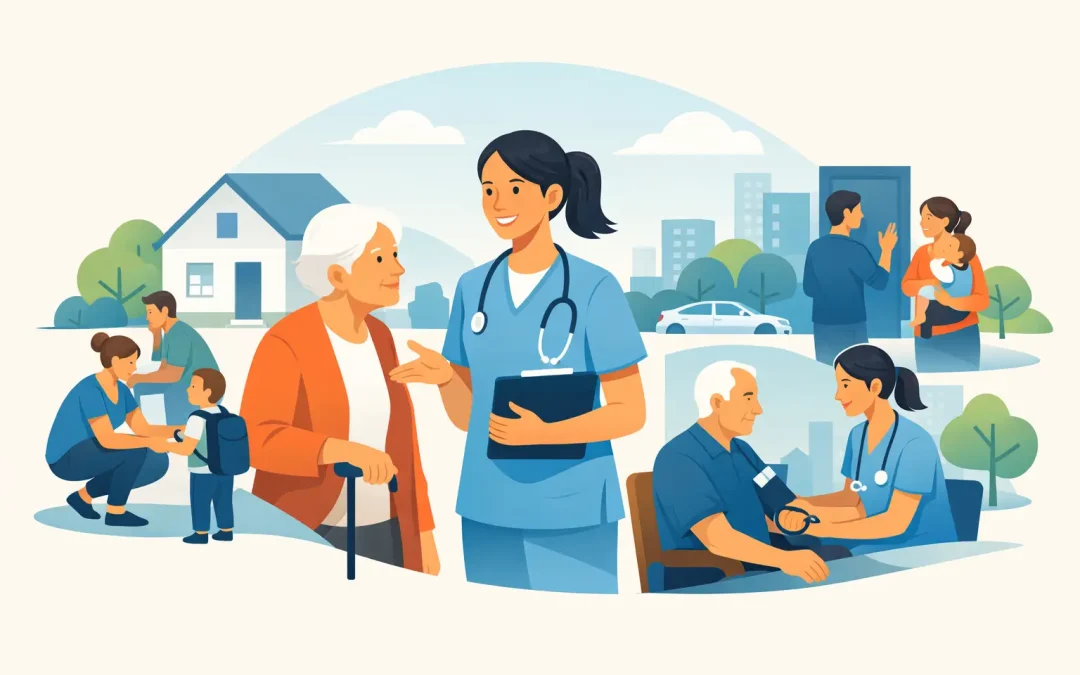
In practical terms, a community nurse may attend the home to complete wound dressings, check vital signs, monitor pain, support diabetes management, administer or supervise medications, provide continence care, assist with catheter care, manage stomas, or assess skin integrity where there is a risk of pressure injuries. They may also identify signs that someone’s health is changing and arrange further medical review before a small issue becomes a bigger one.
That clinical oversight matters. At home, changes can be gradual and easy to miss, especially when family members are already juggling work, appointments and caring responsibilities. A trained nurse can notice patterns, ask the right questions and act early.
More than treatment – they help people stay independent
One of the most valuable parts of community nursing is that it supports independence rather than replacing it. A community nurse does not simply step in and take over. In many cases, they work alongside the client, encouraging them to stay involved in their own care as much as possible.
For an older person, that might mean finding safer ways to manage medications, maintain mobility and avoid unnecessary hospital visits. For someone recovering from injury, it could mean monitoring healing while gradually building confidence to return to normal routines. For a person living with disability, it may involve clinical support that fits around their existing lifestyle and personal preferences.
There is no one-size-fits-all approach. Some people need frequent visits for a period of time, while others only need occasional nursing input as part of a broader care plan. The right level of support depends on the person’s health, home environment, family involvement and goals.
Clinical care that often falls under community nursing
Families are sometimes surprised by how broad community nursing can be. While many people think first of wound care, the scope is much wider than that.
A community nurse may support people with chronic disease management, including observation of symptoms and education around daily health routines. They can assist with insulin management, monitor for infection, provide care for leg ulcers and other slow-healing wounds, and support people after hospital discharge when follow-up care is essential. In some situations, they also provide palliative nursing support, helping manage comfort, symptoms and dignity in the home.
Dementia support can also form part of community nursing, especially where there are behavioural changes, medication concerns, continence issues, nutrition risks or skin concerns that need close attention. In these cases, clinical skill needs to sit alongside patience, calm communication and respect for the person’s familiar routines.
What does a community nurse do for families and carers?
Community nursing supports more than the client alone. It also gives family members and carers practical guidance, reassurance and a clearer sense of what to do next.
Many carers are doing their best with little formal training. They may be worried about dressing a wound properly, giving medication at the right time, noticing early signs of infection, or understanding what changes are expected during recovery. A community nurse can explain care in plain language, demonstrate tasks where appropriate, and answer questions that families may feel embarrassed to ask in a busy hospital setting.
This can reduce stress significantly. It helps families feel less alone and more confident in the care they are providing between visits. It also creates continuity. Rather than repeating the same concerns to multiple services, families can work with someone who understands the person’s condition and can help coordinate the next steps.
When community nursing is especially helpful
Community nursing is often valuable during times of change. The period after a hospital stay is a common example. A person may be medically stable enough to go home, but still need dressings, medication monitoring or support with recovery. Without the right follow-up, there is a higher risk of setbacks and readmission.
It is also helpful when a health condition becomes harder to manage alone. That might happen gradually with ageing, or more suddenly after a fall, illness or accident. For people with more complex needs, community nursing can be part of a larger home care arrangement that includes personal care, domestic support, transport assistance and regular check-ins.
There are also situations where nursing input is needed for a short and defined period, such as post-operative care. In other cases, the support is ongoing because the condition itself is ongoing. Neither option is better or worse. The important thing is that the care matches the person’s actual needs rather than forcing them into a standard service model.
The difference between a community nurse and a support worker
This is a point that often causes confusion. A support worker helps with everyday living tasks such as showering, dressing, meal preparation, light household assistance, transport and social support. A community nurse provides clinical care that requires nursing qualifications, assessment skills and professional oversight.
Both roles can be important, and many people benefit from having both. For example, a person might receive help with personal care and shopping from a support worker while also seeing a registered nurse for wound care, diabetes support or medication management. When these services are well coordinated, the person receives more complete care at home.
What to expect from good community nursing care
Good community nursing should feel clinically sound and personally respectful at the same time. The nurse should not only understand the medical side of care, but also take the time to listen to what matters to the individual.
That includes preferences about routines, concerns about privacy, cultural considerations, family involvement and the person’s own goals for daily life. Some clients want to remain active in their local community. Others are focused on staying comfortable at home, avoiding hospital, or regaining strength after illness. These goals shape the care plan.
Reliable communication is another important part of the service. Families need to know who is involved, what care is being provided, what changes have been noticed and when further action may be needed. Clear follow-up helps reduce uncertainty, especially for people arranging care for the first time.
In Melbourne, where many families are balancing work, travel and caring responsibilities across different suburbs, flexible and coordinated in-home nursing can make a real difference. It brings professional care into the place where people are often most comfortable – their own home.
Choosing the right support
If you are considering community nursing, it helps to look for a service that combines professional nursing care with a personalised approach. Clinical tasks matter, but so does consistency, responsiveness and respect for the person receiving care. Home With Help Homecare Services is owned and led by an experienced Registered Nurse (Nurse Practitioner) with vast experience in hospital, aged and community nursing
Ask whether the service can tailor support to changing needs, whether registered nurses are involved in assessment and care planning, and how communication with families is handled. It is also worth asking what happens if needs become more complex over time. A provider with experience across both everyday home support and higher-level nursing care can often make that transition much smoother.
For many people, the real value of community nursing is not only the treatment provided on the day. It is the confidence that someone is keeping a close eye on their health, helping them remain safe at home, and adjusting care as life changes. When care is thoughtful, flexible and clinically informed, home can continue to feel like the right place to be.
If you are weighing up support for yourself or someone close to you, a good first step is simply to talk through what is happening now and what feels hardest to manage alone. The right care often starts there.