Getting home from hospital can feel like a relief, but it is often the point when the hard part begins. If you are asking, how do I regain strength after hospital stay, you are not alone. Many people expect to feel better as soon as they are back in their own home, only to find they are weak, tired, unsteady, or needing help with simple things that used to feel easy.
That loss of strength is common after illness, surgery, injury, or a longer admission. Time in bed, reduced appetite, pain, disrupted sleep, and the stress of being unwell can all affect your muscles, balance, and stamina. The good news is that strength can usually be rebuilt, but it needs to happen safely, steadily, and in a way that suits your health needs.
Why strength drops after a hospital stay
Even a short hospital admission can lead to deconditioning. This means your body loses fitness, muscle strength, and confidence because you have been less active than usual. For older adults, this can happen surprisingly quickly.
You might notice that standing up feels harder, walking to the bathroom leaves you puffed, or climbing a few steps feels much more difficult than before. Sometimes the issue is not just physical weakness. People also lose confidence after a fall, an operation, or a frightening health event. That can make them move less, which then slows recovery further.
Medication changes can also play a part. Some medicines may cause dizziness, drowsiness, or weakness. Others can affect appetite or fluid balance. If something feels different after discharge, it is worth asking your GP, nurse, or treating team whether your medication could be contributing.
How do I regain strength after hospital stay at home?
The safest answer is usually not to push harder, but to rebuild gradually. Recovery is rarely a straight line. Some days you will feel stronger, and other days you may feel flat. That does not always mean something is wrong. It often means your body is still healing.
A good starting point is to focus on three areas at once: gentle movement, enough nutrition and fluids, and the right level of support. If one of those is missing, recovery tends to slow down.
Start with small, regular movement
When people feel weak, they often think they need one big exercise plan. In reality, small amounts of movement spread across the day are often more realistic and more effective after hospital.
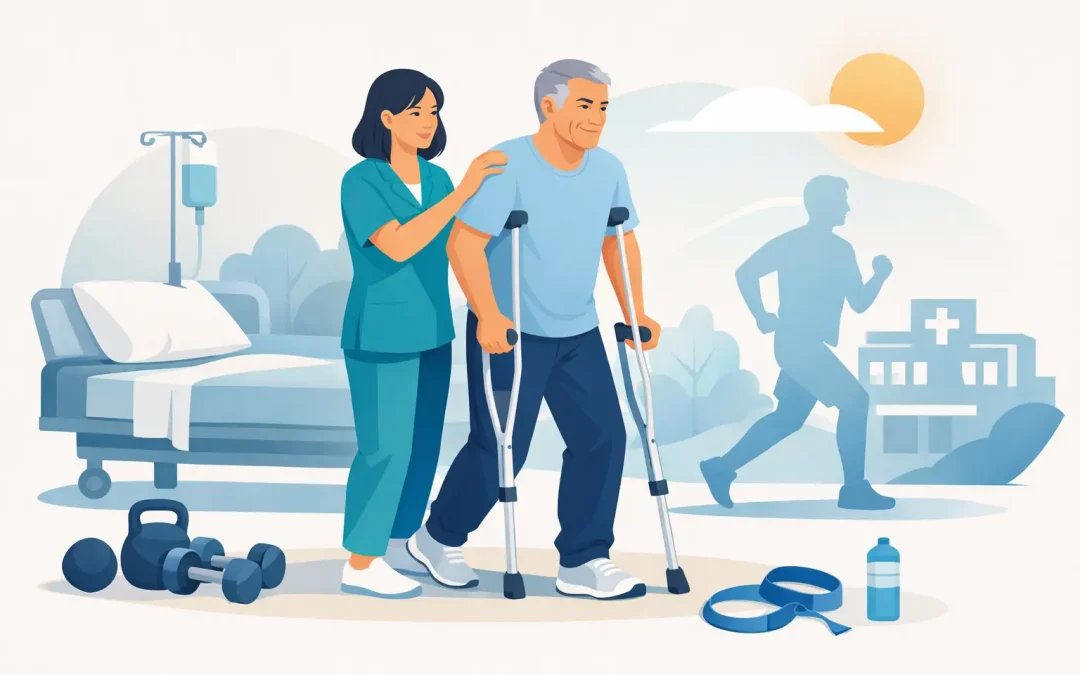
That might mean walking to the kitchen a few extra times, standing up from a chair several times in a row, or doing the exercises given to you by your physiotherapist. If you had surgery, a fracture, a stroke, or another serious condition, always follow the instructions from your treating team rather than making up your own routine.
Consistency matters more than intensity in the early stages. Five short walks around the house may be better than one walk that leaves you exhausted. If you overdo it, you may need a full day to recover, which can set you back.
Eat to support recovery
Strength does not come back from movement alone. Your body also needs fuel to repair tissue and rebuild muscle. After a hospital stay, many people have a poor appetite, altered taste, or trouble preparing meals. That can lead to low energy and slower healing.
Protein is especially important. Foods such as eggs, yoghurt, cheese, fish, chicken, beans, and dairy can support muscle recovery. Regular meals and snacks are often easier than trying to eat large meals. Fluids matter too, especially if dehydration has been an issue.
If you have been told to follow a special diet for diabetes, kidney disease, swallowing difficulties, or another condition, keep to that plan and ask for help if meals are becoming difficult to manage.
Pace yourself without stopping completely
There is a balance between rest and activity. Rest is part of healing, but too much rest can make weakness worse. Pacing means breaking tasks into manageable parts so you can stay active without draining yourself.
For example, you might shower and then rest before getting dressed, rather than trying to do several jobs back to back. You might prepare lunch while seated instead of standing at the bench the whole time. These small changes protect your energy while allowing you to keep moving.
Signs you may need extra support
Sometimes recovery at home goes well with family help and a clear discharge plan. Other times, people need more structured support. That is not a failure. It can be the difference between recovering steadily and ending up back in hospital.
You may benefit from extra help if you are struggling with showering, dressing, meals, transfers, mobility, medication, wound care, continence, or getting to appointments. Support can also be important if a family carer is feeling stretched, especially in the first few weeks after discharge.
A tailored home care plan can make recovery safer and less stressful. Depending on your needs, that may include help with personal care, meal preparation, domestic tasks, transport, mobility support, or nursing care from a registered nurse. Some people only need short-term assistance while they regain strength. Others need ongoing support because their health needs have changed.
What recovery should look like – and when to ask for help
It is normal to feel tired after a hospital stay. It is also normal for progress to be slow. What matters is whether things are gradually improving.
You should speak with your GP or care team if weakness is worsening instead of improving, if you are falling or nearly falling, if you are too breathless to manage basic activity, or if pain is stopping you from moving. New confusion, fever, poor wound healing, swelling, chest pain, or sudden changes in mobility need prompt medical attention.
Sometimes people think they just need to push through. In reality, ongoing weakness can signal a problem that needs review, such as infection, anaemia, poor nutrition, medication side effects, or another medical complication.
The role of nursing and in-home recovery care
For some people, the biggest barrier to recovery is not motivation. It is uncertainty. They are not sure what is safe, how much help they should accept, or whether their symptoms are normal.
This is where clinically informed home support can be valuable. A registered nurse can monitor recovery, check wounds, help with medication management, and identify concerns early. Carers can assist with daily tasks that may currently feel too difficult, while still encouraging independence wherever possible.
That balance matters. Good support should not take over everything you can do for yourself. It should help you do what is safe, reduce the risk of setbacks, and build confidence day by day. At Home With Help Homecare Services, this kind of personalised recovery support is built around the person, not a fixed package, which can be especially helpful after discharge when needs often change from week to week.
How family members can help without doing too much
Families often want to step in and do everything. That comes from care and concern, but too much help can sometimes reduce confidence and activity. The goal is to support recovery, not replace the person’s independence.
A helpful approach is to assist with what is genuinely unsafe or exhausting, while encouraging the person to stay involved in daily routines. That might mean setting up clothing for dressing, supervising a shower, preparing food that is easy to reheat, or walking alongside someone rather than doing every task for them.
It also helps to watch for subtle changes. If your loved one is sleeping much more, eating less, becoming unsteady, or withdrawing because they feel overwhelmed, they may need added support sooner rather than later.
A realistic timeline for getting stronger
One of the most common questions people ask is how long recovery will take. The honest answer is that it depends. Age, the reason for hospitalisation, existing health conditions, nutrition, pain levels, and support at home all affect the timeline.
Some people feel noticeably stronger within a couple of weeks. Others need several months to rebuild stamina and confidence. Recovery can take longer after major surgery, fractures, chest infections, stroke, or any admission that involved long periods in bed.
What matters most is steady progress, not speed. Being able to walk a little farther, manage a shower more comfortably, or get through the day with less fatigue are meaningful signs that your strength is returning.
If you are asking, how do I regain strength after hospital stay, the answer is usually to start small, stay consistent, accept the right help, and let recovery happen step by step. You do not need to do it all at once, and you do not need to do it alone.