Leaving hospital can feel like a relief right up until the practical questions start. Who will help with showering if you are unsteady? What happens if a wound dressing needs changing? How do you get to follow-up appointments if you cannot drive? Post hospital recovery care is there to make that period safer, calmer and more manageable, especially when you are not quite ready to do everything on your own.
For many people, recovery is not only about rest. It is about having the right support at the right time. After surgery, illness, injury or a hospital stay, even simple daily tasks can feel harder than expected. Good support at home can reduce stress, lower the risk of setbacks and help people regain confidence as they recover.
What post hospital recovery care actually includes
Post hospital recovery care is tailored support provided after a person returns home from hospital. The exact care depends on the reason for admission, the person’s health needs and how much help they already have around them. Some people only need short-term assistance for a week or two. Others need a more involved plan with both practical help and clinical care.
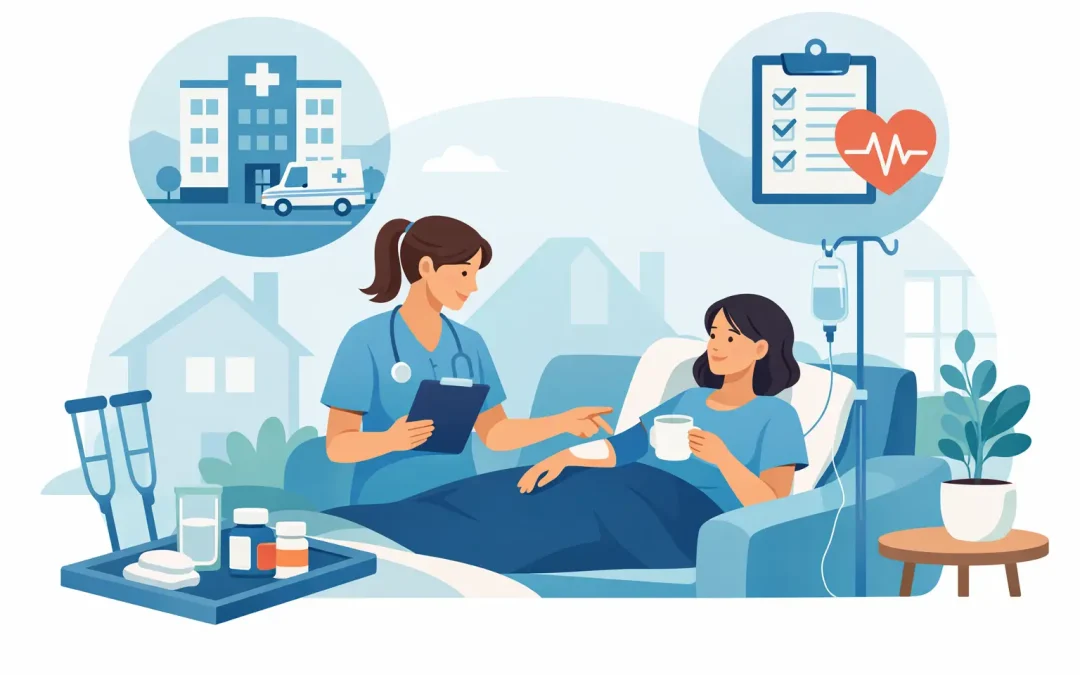
Support often begins with the basics of daily living. That may include help with showering, dressing, meal preparation, mobility around the home and making sure medication routines are followed correctly. These forms of assistance matter because recovery can be slowed by fatigue, pain, reduced strength or the effects of anaesthetic and new medications.
In other cases, clinical support is also needed. A registered nurse may be involved for wound care, medication management, diabetes support, stoma care, continence support or monitoring after a complex discharge. If someone is returning home after an orthopaedic procedure, a fall, a stroke or a serious infection, that nursing oversight can provide valuable reassurance.
Transport and community access can also be part of recovery. Follow-up appointments, scans, physiotherapy and GP visits do not stop after discharge. Getting to them safely and on time is part of the recovery process, not an extra.
Why recovery at home needs a plan
Coming home too early without enough support can create problems. A person may miss medications, struggle to eat properly, become isolated or try to do too much before they are ready. Family members often step in, but they may also be juggling work, children and their own health. What starts as a short-term favour can quickly become stressful for everyone involved.
A care plan helps bring structure to that uncertain period. It sets out what support is needed, when it will be provided and who is responsible for each part of care. More importantly, it reflects the person’s own preferences. Some people want daily support in the morning and privacy in the afternoon. Others need nursing input but prefer to stay as independent as possible with personal tasks. Recovery works better when care fits the person, not the other way around.
That is why consumer-directed care matters. A good provider takes the time to understand routines, risks, goals and family involvement before services begin. Recovery is not identical from one person to the next, even when the surgery or diagnosis is the same.
Who may benefit from post hospital recovery care
This type of support can help a wide range of people. Older Australians are a common group, particularly after a hospital admission that has affected strength, balance or confidence at home. People recovering from joint replacements, abdominal surgery, cardiac events or respiratory illness often need temporary support while they build back up.
It can also be appropriate for adults recovering after an accident, including TAC and WorkSafe-related injuries, where there may be a mix of mobility limitations, pain management and follow-up appointments to coordinate. Some people living with disability may need extra support after a hospital stay because their usual routines have been disrupted or their care needs have changed.
The level of help needed can vary. One person may only need assistance with domestic tasks and transport. Another may need personal care, nursing visits and close observation in the early days after discharge. The key question is not whether someone is very unwell. It is whether they can recover safely and comfortably at home without added strain or avoidable risk.
What to look for in a post hospital recovery care provider
Not all home support is the same. After a hospital stay, it is worth looking for a provider that can offer more than basic help around the house. Recovery often changes from week to week, so flexibility is important. A service that can adjust visit times, increase support if needed and respond promptly to concerns can make the process far less stressful.
Clinical capability also matters. If there is a wound to manage, medications to monitor or health concerns that need a trained eye, access to registered nurses is especially valuable. It allows practical support and clinical care to work together, rather than leaving families to coordinate multiple services on their own.
Good communication is another sign of a dependable provider. Families should know who to contact, what to expect and how changes in care will be handled. Regular follow-up gives people confidence that they are not being left to manage on their own once services start.
A respectful approach matters just as much as technical skill. Recovery can be frustrating, and many people feel vulnerable after discharge. Care should protect dignity, listen to concerns and support independence wherever possible.
How care is tailored after discharge
The first days at home are often the most important. This is when a provider can identify immediate risks such as poor mobility, confusion about medication, low appetite, pain issues or a home environment that is not set up well for recovery. Early support may be more frequent, then ease back as the person improves.
A tailored plan might include personal care in the morning, light domestic help during the week, transport to specialist appointments and nursing visits for dressings or medication checks. For someone living alone, social support can also play an important part. A familiar face and regular contact can reduce anxiety and make recovery feel less isolating.
Family members are often closely involved, but their role should be realistic. Some families want to assist with meals and companionship but not clinical tasks. Others need respite because they have already been providing a high level of support. A good care plan recognises those limits and helps prevent burnout.
For people across Melbourne’s northern, north eastern, western and eastern suburbs, having local support can make coordination easier, especially when discharge happens quickly and services are needed without delay.
Common concerns families have
One of the most common worries is whether care will be too much or too little. The truth is that it depends on the person’s condition, home setup and support network. Starting with an assessment helps match care to actual needs rather than guesswork.
Cost is another concern. Some people access services privately, while others may be eligible for funded supports depending on their circumstances. What matters most at the beginning is understanding what help is required now, then working through the service options clearly and step by step.
Families also worry about losing control once outside support begins. In reality, the right provider should make the process feel more transparent, not less. Care should be explained clearly, adjusted when needed and built around the client’s wishes.
Recovery is not only physical
It is easy to focus on dressings, medications and appointments, but recovery also has an emotional side. People may feel shaken by a hospital stay, worried about another admission or discouraged by how much harder daily life suddenly feels. That emotional load can affect sleep, appetite, motivation and confidence.
Gentle, consistent support can make a real difference. When care is delivered with patience and respect, people are more likely to accept help, stick with treatment and feel secure in their own home again. That is one reason clinically informed, person-centred care matters so much. It supports the whole recovery process, not only the tasks on a checklist.
At Home With Help Homecare Services, this approach is built around the individual, with practical support, nursing care and follow-up tailored to what safe recovery looks like for them. For many people, the goal is simple: to heal well, stay independent and feel supported without feeling overwhelmed.
If you or someone close to you is coming home from hospital, the best next step is often the simplest one – ask what will make the first week at home feel safer, easier and more manageable, then put that support in place early.