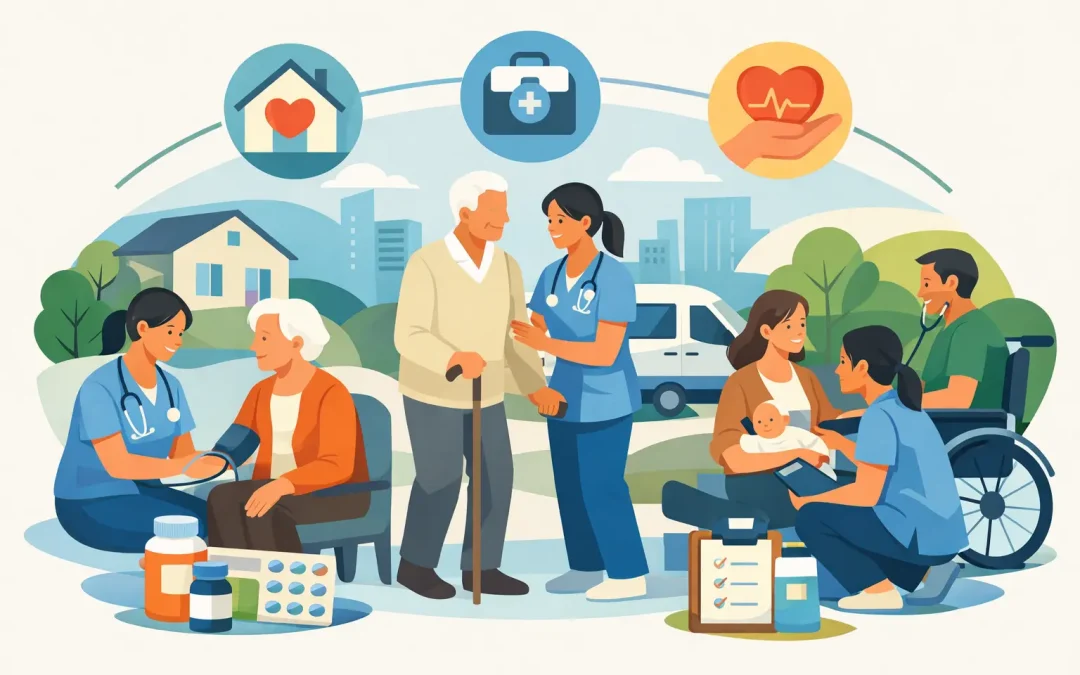
When someone you care about comes home from hospital with a dressing that needs changing, new medication to manage, or mobility that is not quite back yet, the right support can make all the difference. Community nursing services are designed for exactly these moments – and for many others – helping people receive skilled clinical care at home while staying as independent and comfortable as possible.
For many families, the question is not whether support is needed. It is what kind of support is appropriate, how often it should happen, and whether the care will feel personal rather than rushed. Good nursing care in the community should do more than complete a task. It should reduce stress, support recovery, and help the person receiving care feel safe, respected and involved in decisions.
What are community nursing services?
Community nursing services provide clinical care outside a hospital or residential setting, usually in a person’s home. The care is delivered by qualified nurses, often alongside trained support staff, depending on the person’s needs.
This can include short-term care after surgery or illness, ongoing nursing support for chronic health conditions, or more complex clinical assistance for people who want to remain at home. The goal is not simply to treat a condition. It is to support daily life, prevent avoidable complications, and help people continue living in a familiar environment with dignity.
That matters because home is often where people feel most at ease. Being at home can improve confidence, maintain routines and keep family close. But home care only works well when it is properly coordinated and tailored to the person, not delivered as a generic checklist.
Who community nursing services can help
The need for nursing care at home looks different from one household to the next. Some people need support for a few weeks while they recover from a hospital stay. Others require regular nursing visits as part of managing long-term health issues.
Older people are a major group who benefit, especially when they want to stay in their own home but need help with things like wound care, medication support or monitoring changes in health. Adults living with disability may also need clinical care as part of a broader support plan that helps them manage both daily living and health needs.
Community nursing can also be valuable for people recovering after surgery, illness, injury, motor vehicle accidents or workplace accidents. In these cases, care at home often sits alongside rehabilitation and practical support, making recovery more manageable.
Families and carers also benefit. When a registered nurse is involved, there is reassurance that changes in condition are noticed early, care tasks are carried out safely, and advice is based on clinical experience rather than guesswork.
What community nursing services usually include
The scope of care can be broad, and that is one reason these services are so helpful. A person may only need one type of nursing intervention, or they may need a mix of clinical and personal support.
Common services include wound care, medication assistance, insulin management, continence support, catheter care, stoma care, pain management and health monitoring. Some providers also support people with dementia, palliative care needs, reduced mobility, or more complex health conditions that require regular observation and adjustment.
What is appropriate depends on the individual. For example, someone recovering from surgery may need wound dressings and medication reminders for a short period. Someone living with diabetes may need ongoing support with insulin administration and monitoring. A person with advanced illness may need careful symptom management and compassionate palliative care that supports both comfort and family involvement.
This is where clinical judgement matters. The right service is not always the most intensive one. It is the one that matches the person’s needs, risks, preferences and goals.
The difference between nursing care and general home support
Families sometimes assume all in-home care is the same, but there is an important difference between general support and nursing services. Domestic help, meal preparation, transport, personal care and companionship can all be essential, but they are not a substitute for clinical care.
If a person has a wound that needs assessing, medication that must be administered correctly, or symptoms that may indicate a change in health, a registered nurse brings the appropriate training and oversight. In many situations, the best outcome comes from combining both types of support – practical help for everyday living and skilled nursing care for health needs.
Why personalised care planning matters
No two people have the same home, health history, family situation or comfort level. That is why personalised planning is central to effective community nursing services.
A good care plan should start with listening. What does the person want to keep doing independently? What worries the family most? What clinical risks need to be managed? What routines matter to the person receiving care? These details shape a care plan that is safe, realistic and respectful.
Personalised care also allows the service to change over time. Recovery may go well and visits can reduce. A chronic condition may become more complex and require closer monitoring. Family carers may need short-term respite. Flexible planning makes it easier to respond without unnecessary disruption.
At Home With Help Homecare Services, this tailored approach is central because care works best when people are supported the way they want to be cared for.
When to consider community nursing services
Some families seek nursing support early, while others wait until a problem becomes urgent. In practice, earlier support often prevents greater stress later on.
It may be time to consider community nursing if a person has been discharged from hospital and still needs clinical follow-up at home. It may also be appropriate if medications are becoming harder to manage, wounds are slow to heal, falls or reduced mobility are affecting safety, or a long-term condition is becoming more difficult to monitor.
Another common sign is carer strain. Family members often do an extraordinary amount, but they should not have to take on complex care tasks without guidance. Bringing in nursing support can protect everyone’s wellbeing, not just the person receiving care.
Questions worth asking before choosing a provider
Not all services offer the same level of clinical support or coordination. It helps to ask who will deliver care, whether registered nurses are involved in assessments and planning, how changes in condition are managed, and whether follow-up is built into the service.
It is also worth asking how flexible the care is. Some people need a regular schedule. Others need support that can increase or decrease depending on recovery, illness or family circumstances. Clear communication matters too. Families should know who to contact, what to expect, and how concerns will be addressed.
A dependable provider will not overpromise. They will explain what can be done safely at home, where extra services may be needed, and how care can be coordinated in a practical way.
Community nursing services and independence at home
There is sometimes a fear that accepting help means losing independence. In reality, the right support often protects it.
When pain is managed properly, dressings are changed on time, medications are handled safely and health issues are picked up early, people are often better able to continue with daily routines. They may have more energy, less anxiety and fewer setbacks. That can mean staying at home longer, avoiding unnecessary hospital visits, and feeling more confident day to day.
Independence does not always mean doing everything alone. Often, it means having the right support in place so that life remains as stable and familiar as possible.
The value of coordinated care
One of the most overlooked parts of good in-home nursing is coordination. Clinical care rarely exists in isolation. A person may also need personal care, transport to appointments, domestic help, family communication and regular review as needs change.
When these pieces are coordinated well, care feels manageable. When they are not, families can end up repeating information, juggling multiple contacts and worrying that something important has been missed.
That is why ongoing follow-up is so important. Nursing support should not feel like a single visit and then silence. It should provide continuity, responsiveness and a clear sense that someone is keeping an eye on the bigger picture.
Choosing support at home can feel like a big step, especially if you are arranging care for the first time. But the right nursing care does not take over a person’s life. It supports it quietly, capably and with respect, so home can continue to feel like home.